Netflix has taken a genuinely fascinating story about presidential security and turned it into 28 minutes of journalists interviewing journalists about what happened to journalists.
The premise should be impossible to ruin. After an alleged Iranian threat, Donald Trump is quietly removed from Air Force One in a catering truck and placed aboard another aircraft. The original plane departs without him while much of the traveling press corps remains on board, unaware that the president they are assigned to cover is no longer anywhere near them.
That is a tremendous story. It contains an assassination threat, the Secret Service, two airplanes, international intrigue and a catering truck. All Netflix had to do was point the camera at it.
Instead, The Decoy Plane becomes an oral history of reporters discovering they were not the most important people on a presidential security mission.
The journalists describe lowered window shades, unexplained vehicles and unusual activity around the plane. They recount their suspicions with the solemnity of detectives reconstructing the Kennedy assassination. Having failed to determine that the president had left the aircraft while the story was actually happening, they are now invited to explain at length how perceptive they were.
The press-corps interviews are especially difficult to take seriously. Their speech is littered with "like" and other teenage filler while they deliver what is supposed to be a grave account of an international security incident. These are experienced professionals traveling with the president of the United States, but the documentary often makes them sound like freshmen describing something weird that happened after lunch.
More importantly, they make the story about themselves. The question gradually stops being how the Secret Service moved a president under threat and becomes how upsetting it was that the press corps was not consulted about it.
There is a legitimate question buried underneath all of this: if an aircraft was being used as part of a deception against a credible threat, what duty did officials have to the people left aboard it? The documentary could have investigated that question. It could have established precisely what the threat was, who knew about it, what risk the original plane actually faced and whether anyone aboard was placed in greater danger.
It mostly gives us reaction shots instead.
The strangest part is the journalists' surprise that they could have been targets. They talk about previous dangerous assignments and the warnings that accompanied them, then seem astonished to learn that traveling with Donald Trump might expose them to an Iranian assassination threat. They were flying around the world with one of the most recognizable and frequently threatened people alive. What exactly did they think was going to happen?
Being unknowingly used as a decoy would be a serious allegation. Merely discovering that presidential travel carries danger is not. The documentary repeatedly blurs those two ideas because the first requires evidence and the second merely requires another interview.
The result has all the machinery of an urgent investigation without much investigation. Dramatic music, breathless recollections and "breaking news" energy are used to inflate a story that could have been explained in a strong ten-minute news segment. Its rapid production is visible in the thin reporting, repeated information and absence of a clear conclusion.
There is a good documentary hiding somewhere inside The Decoy Plane. Unfortunately, it appears to have switched aircraft before Netflix started filming.
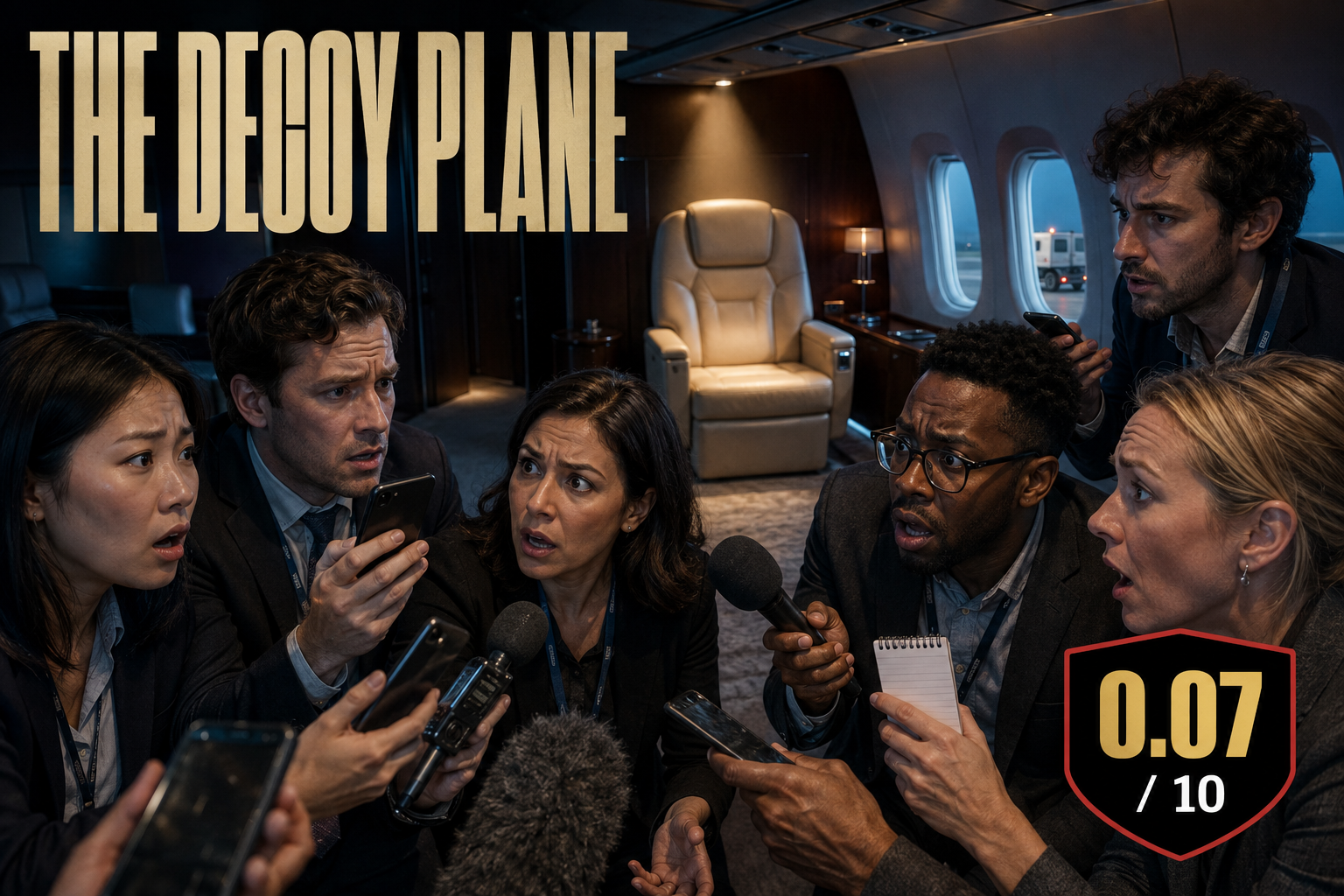
Final Score: 0.07 / 10